

Pressure Sensitive Adhesives
Most people have used a pressure-sensitive adhesive without ever knowing that is what it was called. The tape holding a label onto a product, the sticky backing on a foam pad, the adhesive strip on a protective film — all of it is PSA technology at work. At Best Woodworking Glue, we work with adhesives across every category, and pressure-sensitive adhesive glue is one of the most misunderstood — and most useful — product types in the industry.
This guide covers what PSA actually is, where it genuinely performs, and what separates a good product choice from a costly mismatch.
What Are Pressure-Sensitive Adhesives?
A pressure-sensitive adhesive is a dry adhesive that forms a bond when light pressure is applied — no heat, no solvent, no water activation required. PSA technology sits in an interesting middle ground — the adhesive never fully dries, never fully liquefies. It stays in a permanent semi-flexible state that allows it to grab a surface the moment pressure is applied.
PSA does not behave like a conventional adhesive. Press it against a surface, and it quietly moves into every tiny crack and ridge, building contact without any heat or trigger. Pull it back, and that same softness firms up, resisting the peel. It is not two separate states switching on and off — both are happening at once, all the time. That back-and-forth between grip and release is not a flaw in the material — it is the whole point. The same chemistry that lets a PSA bond permanently to a metal surface also allows a different formulation of that same base technology to peel cleanly off a painted wall without leaving a mark. That is not a quirk of the material. It is the design intent. Two different factories, two completely different end uses, one underlying technology — what changes is how the formulation is tuned, not what the adhesive fundamentally is.
How Does Pressure-Sensitive Adhesive Glue Work?
Unlike most adhesives, PSA never reaches a finished state. There is no moment where it sets, hardens, or completes a reaction. It stays exactly as it was when applied — semi-fluid, always ready to bond under pressure. That permanent in-between state is not a limitation. It is what the entire technology is built around. Push it against a surface, and the material works its way into every irregularity it can find, not through force but through the natural tendency of a semi-fluid material to fill available space. The grip that builds from that contact is quiet, immediate, and surprisingly strong for something that never cured.
The Role of Viscoelasticity in PSA Performance
What makes PSA genuinely interesting from an engineering standpoint is that it holds two contradictory behaviours at once. During application, it acts like a liquid — spreading, flowing, filling. During removal, it acts like a solid — resisting, holding, pushing back against the peel force. Neither state fully takes over. A tape that only flowed would never hold. A tape that only resisted would never bond on contact. The balance between those two tendencies — managed through formulation — is what determines peel strength, tack level, and whether a PSA product is suited to permanent bonding or clean removal.
Key Raw Materials Used in Pressure Adhesive Formulations
Rubber, acrylic, silicone — these cover almost every PSA application on the market, but they are not a hierarchy. Rubber is not cheaper because it is inferior. Acrylic is not better across the board. Silicone is not reserved for special cases because of cost alone. Each one performs well inside its own range and poorly outside it. Natural rubber PSAs grab fast, peel strong, and cost less per roll — which is why they still dominate packaging tape and general labelling. Acrylic earned its place in industrial markets through better UV resistance, wider temperature tolerance, and chemical stability that rubber simply could not match. Silicone covers the applications that push beyond what either can handle — sustained high heat, medically sensitive surfaces, and chemically aggressive contact zones. Matching the right polymer to the right application is the actual job. Getting that match wrong is where most PSA product disappointments start.
Where Are Pressure-Sensitive Adhesives Used?
Production environments do not tolerate waiting. A carton on a sealing line needs to close and move — there is no curing window built into that process. A protective film going onto a furniture panel has a specific job — hold firmly through factory handling, freight, and installation on-site, then release cleanly the moment it is no longer needed, without taking any of the panel finish with it. That sounds straightforward. Getting the tack level, carrier stiffness, and release force calibrated to do all three reliably is not. The PSA products that handle this well in Indian furniture manufacturing are built to a precise specification, and using a general-purpose tape as a substitute tends to show up as either early lift-off during transit or finish removal damage.
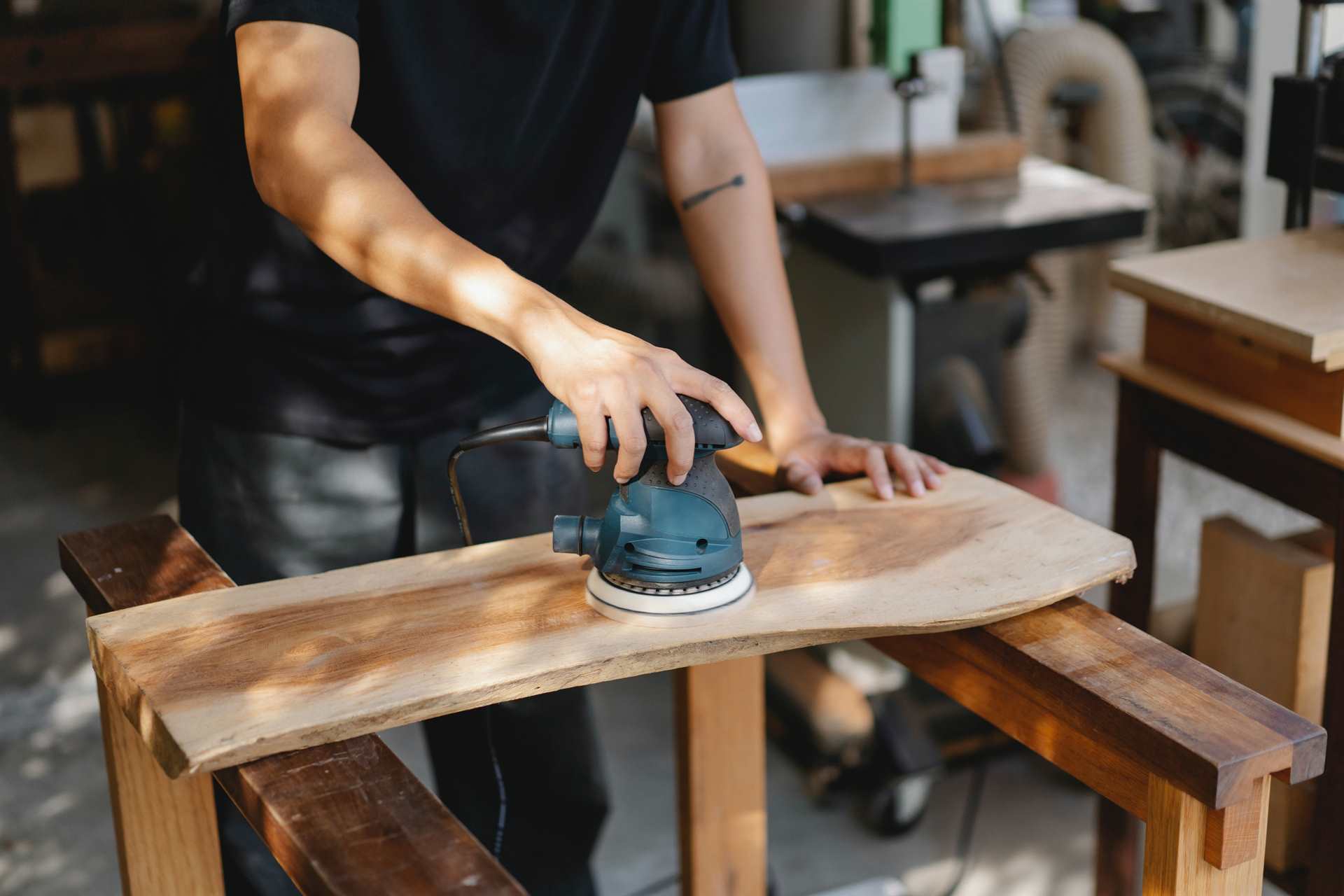
In woodworking and furniture manufacturing specifically, pressure-sensitive adhesive glue is used for surface protection films on panels, edge trim bonding, veneer application, and temporary fixturing during assembly. In India’s growing packaging and manufacturing sector, pressure adhesive tape has become indispensable — production lines running at speed cannot pause for adhesives to cure. Labelling machines, carton sealers, foam fabrication, and surface masking during finishing all run on the reliability of consistent pressure adhesive performance shift after shift.
Types of Pressure-Sensitive Adhesive Tape and Products
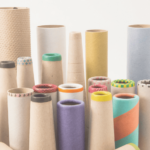
Carrier material, adhesive formulation, and release liner — these three variables determine whether a PSA tape works well in your application or fails within a week. Buying on price alone without matching those variables to the job is where most PSA product failures actually start.
Permanent vs. Removable — and Choosing the Right One
Permanent PSA products grip and keep gripping. As the adhesive continues to flow into a surface over time, the bond actually strengthens after initial application — which is why permanent pressure adhesive tape on metals, plastics, and coated substrates gets harder to remove the longer it sits.
Getting the tack-to-cohesion balance right is what separates a removable PSA product that works from one that either falls off mid-use or tears the substrate on removal. Too much tack and it bonds permanently regardless of the label on the box. Too little and it will not hold through normal handling. The products that do this well — clean-release labels, masking films, repositionable tapes used in woodworking and printing — are genuinely difficult to formulate, even if they look simple from the outside.
Silicone PSA for heat-heavy environments is not a premium upgrade — it is a requirement. Standard acrylic begins to lose cohesive strength above a certain temperature threshold, and in applications like automotive under-bonnet components or industrial equipment, that failure point matters. Outdoor and UV-exposed surfaces present a different challenge — photodegradation breaks down acrylic and rubber formulations over time, which is why weathering-stable PSA products use UV-resistant chemistry rather than standard polymer systems. Specifying these correctly upfront avoids bond failures that only become visible months after installation.
Solvent-Based vs. Water-Based PSA Formulations
The shift toward water-based PSA across Indian manufacturing was not driven by performance data alone. Factories got cleaner. Regulations got stricter. Buyers started asking questions about VOC content in their supply chains. Solvent-based systems did not disappear — they still perform better in genuinely demanding conditions — but for the bulk of labelling, sealing, and light-duty bonding that makes up most production volume, water-based PSA became the practical default. It delivers what is needed without the regulatory complications that solvent-based systems increasingly carry.
How to Choose the Right Pressure-Sensitive Adhesive
Polyethylene and polypropylene trip up a lot of buyers. These surfaces have low surface energy, which means most standard acrylic tapes will sit on top of them without ever building a real bond — firm pressure makes no difference if the adhesive chemistry is not matched to the substrate. It is one of the most common and most avoidable PSA failures in Indian packaging and assembly work. Specifying the right formulation upfront costs nothing extra. Discovering the mismatch after a production run does.
Application pressure matters more than most buyers expect. An unevenly applied PSA tape will never reach the bond strength the product is rated for — not because the adhesive is poor quality, but because it was never properly activated. Cold substrates compound the problem further. Most PSA products need surfaces above 10°C to bond correctly, and anything applied in cold conditions needs time at room temperature before the bond reaches its working strength.
Pressure Sensitive Adhesives in the Indian Market
India’s packaging, automotive, and electronics sectors have driven steady demand growth for PSA products over the past decade. As domestic manufacturing scales and global buyers push for better assembly standards, pressure sensitive adhesive tape and glue products have moved from specialty items to production essentials across mid-size and large manufacturing units. Domestic production has kept pace — quality PSA products are now manufactured locally across a range of performance grades, making them accessible without the lead times and costs that came with import dependency.
At Best Woodworking Glue, our adhesive pressure sensitive product range is formulated to meet the real demands of Indian manufacturing environments — delivering consistent tack, reliable peel strength, and performance that holds across temperature, humidity, and substrate variation.
Final Thoughts
Pressure sensitive adhesives look simple on the surface. Peel, stick, done. But the engineering behind a well-formulated PSA product — the balance of tack, peel strength, cohesion, and substrate compatibility — is anything but simple. Choosing the wrong product does not just mean a failed bond. It means production downtime, damaged substrates, or adhesive residue that takes hours to clean.
At Best Woodworking Glue, we help manufacturers, production managers, and procurement teams find the right pressure-sensitive adhesive for their exact requirements. Because the right bond does not just hold — it performs consistently, every single time.