


Contact Adhesive Glue in India
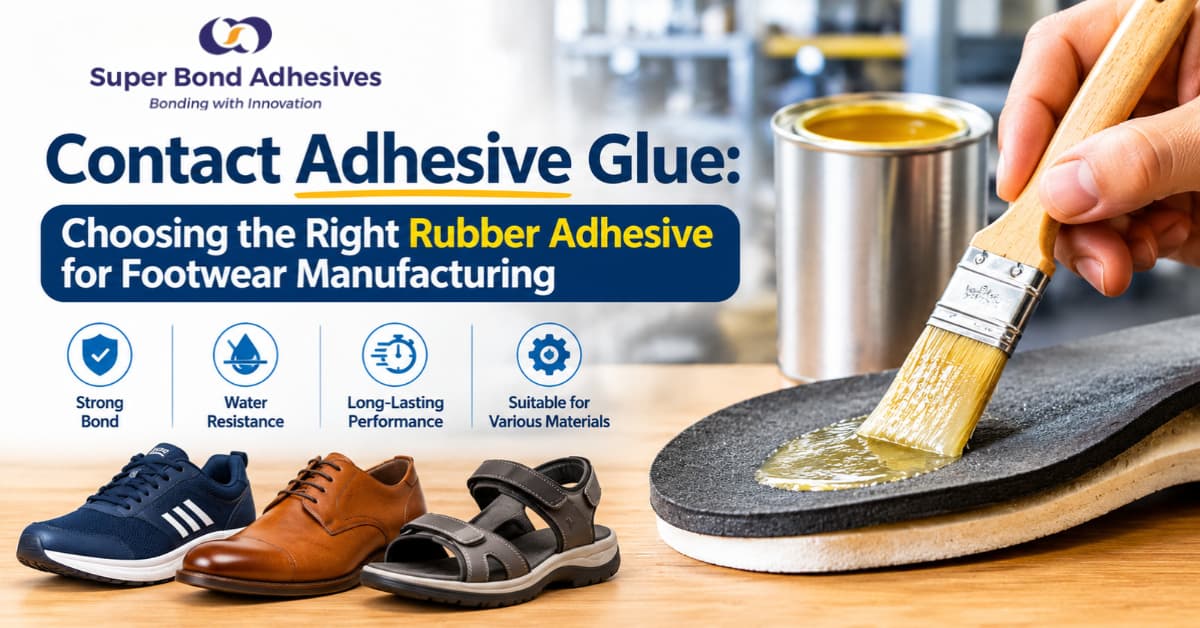
Choosing the right contact adhesive glue is essential in footwear manufacturing, where different materials must be bonded without compromising flexibility, durability, or product quality. From attaching shoe soles to leather uppers to joining rubber components, manufacturers need adhesives suited to their materials and production requirements.
Rubber-based adhesives are widely used in footwear applications because of their bonding properties and suitability for flexible materials. Established in 1974, Superbond offers adhesive solutions for footwear, leather, and various industrial applications, helping manufacturers identify suitable products for their bonding requirements.
Key Facts
- Contact adhesive glue: Bonds compatible surfaces after adhesive application and the recommended drying period.
- Footwear applications: Used for sole attachment, leather uppers, insoles, trims, and rubber components.
- Rubber-based adhesives: Suitable formulations can support bonding requirements involving flexible materials.
- Material compatibility: Adhesive selection depends on rubber, leather, PU, PVC, EVA, and other substrates.
- Selection factors: Flexibility, initial tack, drying time, moisture resistance, and application method are important considerations.
Understanding Contact Adhesive Glue for Footwear Manufacturing
Contact adhesive glue is designed to bond two compatible surfaces. It is generally applied to both surfaces and allowed to reach the recommended bonding condition before they are pressed together.
This makes contact adhesives useful in footwear production, where manufacturers assemble different components such as rubber soles, leather uppers, and synthetic materials.
The general application process includes:
- Surface preparation: Remove dust, grease, oil, and other contaminants.
- Adhesive application: Apply an even layer to both bonding surfaces.
- Drying: Allow the adhesive to dry according to the manufacturer’s instructions.
- Joining: Position both surfaces accurately and bring them into contact.
- Pressure: Apply firm, uniform pressure to establish proper contact.
Drying time and application requirements vary according to the adhesive formulation and materials.
Why Rubber-Based Adhesives Matter in Footwear Production
Rubber-based adhesives are important in footwear manufacturing because shoes contain flexible components that experience repeated movement during use.
A suitable synthetic rubber adhesive can provide bonding properties for compatible materials while supporting the flexibility required in footwear applications.
Important characteristics include:
- Flexibility: Helps accommodate movement in footwear components.
- Initial tack: Helps hold components together after contact.
- Material compatibility: Supports bonding between suitable rubber, leather and synthetic substrates.
- Moisture resistance: Important for footwear exposed to humidity and wet conditions, depending on the adhesive formulation.
- Production consistency: Suitable application and drying characteristics help manufacturers maintain consistent assembly processes.
Not every rubber adhesive offers the same properties. Manufacturers should evaluate product specifications before selecting a formulation.
Where Is Contact Adhesive Glue Used in Shoe Manufacturing?
Contact adhesives are used in several footwear assembly operations, depending on the materials and bonding requirements.
- Shoe sole bonding
Sole attachment is a major bonding operation. Rubber-based and polyurethane adhesives are used depending on the sole material, upper material, and footwear construction.
- Leather-to-rubber bonding
Leather footwear often combines leather uppers with rubber soles and synthetic components. A suitable leather adhesive must be compatible with both surfaces.
- Insole attachment
Adhesives help attach compatible insole materials to other shoe components, supporting the footwear assembly process.
- Rubber-to-rubber bonding
Rubber components are common in footwear. A suitable rubber solution adhesive can be considered for bonding compatible rubber surfaces.
- Trims and accessories
Adhesives are also used for attaching decorative trims, reinforcement materials, linings, and other footwear accessories.
Choosing the Right Adhesive for Different Footwear Materials
Selecting an adhesive based only on its advertised strength can lead to unsuitable results. Manufacturers should first identify the materials being bonded.
| Bonding application | Important considerations |
| Rubber to rubber | Rubber compatibility and flexibility |
| Leather to rubber | Surface preparation and material compatibility |
| Rubber to metal | Metal preparation and primer requirements |
| Plastic to rubber | Plastic type and adhesive compatibility |
| PU to rubber | Substrate compatibility and application procedure |
| Leather to synthetic materials | Surface condition and bonding performance |
Synthetic Rubber Adhesive
Synthetic rubber adhesive is used in applications requiring rubber-based bonding properties. It may be suitable for compatible footwear materials, including certain rubber and leather combinations. The formulation must match the specific application.
Rubber-to-Metal Adhesive
Rubber-to-metal adhesive is used in industrial applications involving rubber and metal components. Proper metal cleaning, surface preparation, and primer application may be necessary, depending on the adhesive.
Waterproof Glue for Plastic and Rubber
Manufacturers looking for waterproof glue for plastic and rubber should consider the exact plastic and rubber types, environmental conditions, and required moisture resistance.
Water resistance should always be confirmed through the product’s technical datasheet and application testing.
Silicone Rubber Adhesive
Silicone rubber adhesive uses different chemistry from conventional synthetic rubber-based contact adhesives. It is used in applications involving silicone materials and other compatible substrates. It should not automatically be considered a replacement for footwear contact adhesive.
What Manufacturers Should Check Before Selecting Contact Adhesive Glue
Before choosing a strong adhesive glue for footwear production, manufacturers should evaluate:
- Material compatibility: Identify the exact rubber, leather, PU, PVC, or EVA materials.
- Application method: Check whether the adhesive supports brush or spray application.
- Drying time: Understand the recommended drying period and bonding window.
- Bonding performance: Test the adhesive using actual production materials.
- Flexibility: Ensure suitability for components that experience repeated movement.
- Moisture resistance: Verify performance where footwear may encounter water or humidity.
- Technical support: Review product datasheets, application instructions, and manufacturer support.
These checks help businesses select adhesives that match their manufacturing processes rather than relying on general product claims.
Superbond: Rubber-Based Adhesive Solutions for Footwear and Industrial Applications
Superbond is an Indian adhesive manufacturer with a history dating back to 1974. Its product portfolio includes rubber-based adhesives, brushable adhesives, and polyurethane adhesive solutions for footwear, leather, and other industrial applications.
For footwear manufacturers, Superbond offers products including SR 4X, SR 5X, SR 7X and SR 9X, along with footwear adhesive solutions and primers. The appropriate product depends on the substrate combination and application requirements.
Beyond footwear, Superbond serves multiple industrial segments:
- Footwear and leather: Adhesive solutions for footwear components and leather applications.
- Automobile: Adhesives for automotive components and related manufacturing requirements.
- HVAC: Adhesive applications for heating, ventilation, and air-conditioning systems.
- Mattresses: Adhesives for mattress manufacturing.
- Foam and furnishing: Solutions for foam, upholstery and furnishing applications.
- Woodworking: Adhesives for suitable woodworking and furniture applications.
Manufacturers can explore Superbond’s rubber-based adhesives for footwear and leather applications to learn more about its product range.
The Bottom Line
Choosing the right contact adhesive glue is essential for footwear manufacturers looking for reliable bonding between different materials. Whether the application involves rubber-to-rubber bonding, leather-to-rubber attachment or shoe sole assembly, adhesive selection should consider material compatibility, flexibility, moisture resistance, and production requirements.
With experience dating back to 1974, Superbond offers rubber-based and other industrial adhesive solutions for footwear, leather and multiple manufacturing sectors. Businesses can connect with Superbond to discuss their specific adhesive requirements.
Frequently Asked Questions (FAQs)
1. What is contact adhesive glue used for?
Contact adhesive glue bonds compatible materials by applying adhesive to both surfaces and joining them after the recommended drying period. It is used in footwear, leather, furniture, foam and industrial applications.
2. Which is the best adhesive for shoes?
The best adhesive for shoes depends on the materials being bonded. Rubber-based and polyurethane adhesives are used for different footwear applications. Manufacturers should consider sole material, flexibility and bonding requirements.
3. Is synthetic rubber adhesive suitable for footwear manufacturing?
Yes, suitable synthetic rubber adhesive formulations can be used for footwear applications involving compatible rubber, leather and other materials.
4. What glue is best for bonding rubber to rubber?
A rubber-based adhesive formulated for the specific rubber materials can be considered. Surface preparation and application requirements also affect bonding performance.
5. Can rubber adhesive bond rubber to metal?
Certain rubber adhesives can bond rubber to metal. Metal surface preparation and primers may be required depending on the formulation.
6. Is contact adhesive waterproof?
Not all contact adhesives are waterproof. Moisture resistance depends on the formulation and should be verified through technical documentation.
7. What is the difference between rubber adhesive and silicone rubber adhesive?
Rubber-based adhesives commonly use natural or synthetic rubber components, while silicone adhesives use silicone chemistry. Their properties and applications differ.
8. Is Loctite shoe glue suitable for industrial footwear manufacturing?
Loctite offers products for different shoe repair and bonding applications. Industrial manufacturers should evaluate product specifications and production suitability before selecting an adhesive.
9. How do manufacturers choose adhesive for leather and rubber shoes?
Manufacturers should identify the materials, check adhesive compatibility, prepare surfaces correctly and evaluate flexibility, drying time and bonding performance.
10. How can manufacturers identify reliable adhesive companies in India?
Evaluate manufacturing experience, product range, technical documentation, product consistency, application knowledge, and technical support before selecting an adhesive supplier.
Blog – https://superbond.co.in/rubber-adhesive-for-outdoor-industrial-applications/
https://superbond.co.in/choosing-the-right-contact-adhesive-for-shoes/