



Painting vs Waterproofing
Painting: Visual aspect
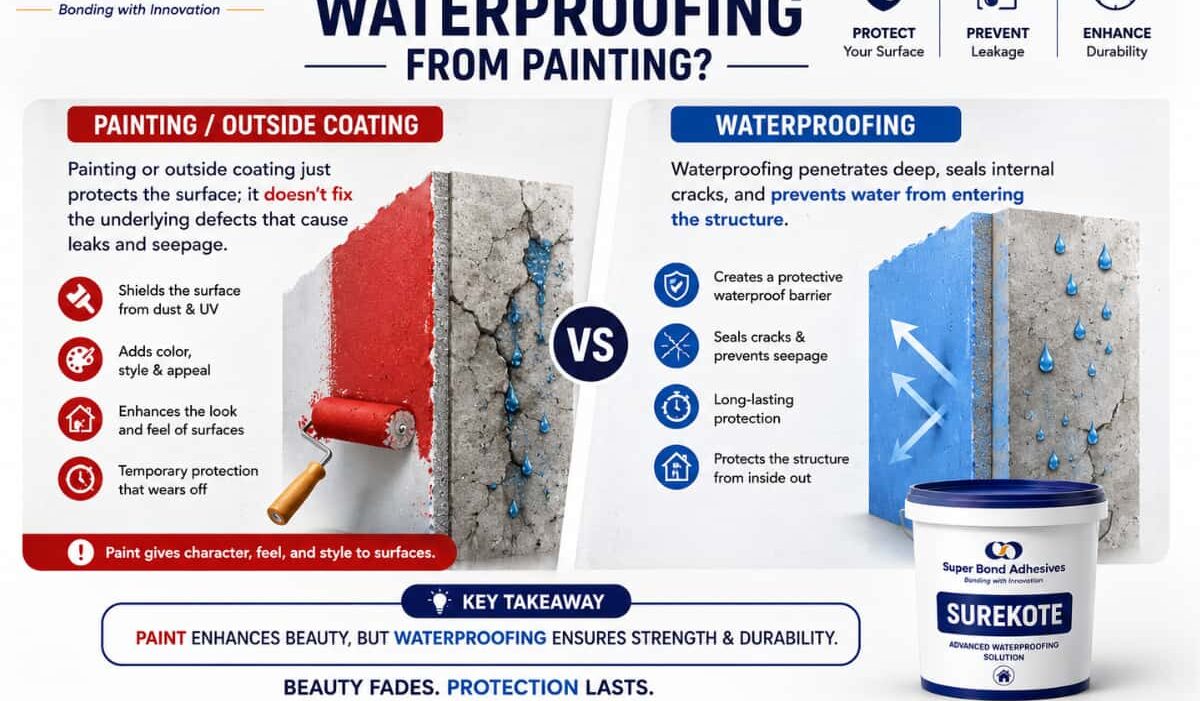
Painting or outside coating just protects the surface; it doesn’t fix the underlying defects that cause leaks and seepage. Paint gives character, feel, and style to surfaces.
Waterproofing: Protection aspect
Waterproofing protects the same surfaces from deterioration, UV rays, and moisture invasion. Your property will remain dry and safe due to waterproofing’s specialized solutions and professional approach. In order to build an impermeable barrier against water incursion, waterproofing entails applying specific sealants to seams, gaps, and fractures. It protects the structure of the house by providing a shield that extends beyond apparent surfaces.
Common Application Areas
Painting: Walls, trim, decorative surfaces, and exterior and interior walls.
Waterproofing: Basements, foundations, terraces, bathrooms, and roofs.
Key Distinctions Between Painting and Waterproofing
The false belief that a coat of paint will safeguard your walls from moisture or water intrusion frequently causes confusion. Painting and waterproofing differ in the following ways:
- Formulations and target properties:
Pigments, emulsions or dispersions, and additives that provide shine or drying properties make up the majority of paints. Although some specialist paints offer some degree of UV or moisture protection, their primary purpose is to enhance aesthetics.
Elastomers, polymers, and specific fillers are used to resinously fill waterproofing products. Their goal is to construct a chemical or physical barrier that keeps water out. Additionally, some treatments include UV stabilizers that either reflect or absorb harmful UV light, protecting the waterproof layer and the surface from photodegradation.
- Performance Evaluation: Aesthetic vs. Protection
Paint performance is evaluated based on its ability to hide defects, maintain color, and be consistent. By addressing the root of the issue, waterproofing stops water intrusion. In contrast, waterproofing products are tested for UV reflectance, tensile strength, flexibility, and water resistance. This demonstrates a key distinction between their operational goals. In addition to guaranteeing that your freshly painted wall looks and stays new, the right wall waterproofing solutions will deal with these problems at their root.
- Durability Under Different Climatic Conditions –
When exposed to direct UV light over time, plain external coatings do fade or chalk, especially if they are not carefully manufactured. Protecting your home from water-related damage is essential if you want the exterior coating to endure longer. Adding a layer of waterproofing accomplishes something. Solutions for wall waterproofing are made to endure harsh environments and provide durable protection against water damage, including rainwater. Consequently, your home will last longer and be more durable from the inside out.
Benefits and limitations of paints:
- Provides a layer of protection that helps preserve color and texture
- More affordable and easier to access
- There are certain restrictions with water-resistant paint. Here are some drawbacks to be aware of: fades off quickly in areas that are prone to dampness, including external walls. This results in regular repainting
- Used for aesthetic purposes and does not stop leaks
Benefits and limitations of waterproofing solutions
- Compared to water-resistant paint, solutions like waterproof wall paint produce a thicker and more resilient barrier. This barrier contributes to providing better protection against seepages and water intrusions
- Long-lasting, durable solution
- Short pot life to be used immediately.
- Avoid dilution, unlike water-resistant paint
Conclusion
Painting and waterproofing are similar in that both need the application of a coating. However, their goals and results are very different. While waterproofing is about protection, particularly against UV rays, moisture infiltration, and environmental degradation, painting is about aesthetics, transforming surfaces with colourful shades or inventive finishes. Painting and waterproofing are ultimately essential elements of modern construction. Understanding their differences enables stakeholders to use the appropriate solution in the appropriate situation, beauty when it is desired, and protection where it is necessary. When used properly, they cooperate to preserve the durability, usefulness, and aesthetic appeal of our built environment for many years to come.